 AI ORCA
Real build · Stuart Robertson Mindset
Forty-five five-star reviews, and no home of their own.
Stuart spent thirty years in Police Scotland, retired as an Inspector, and has been coaching since 2017 — life coaching, NLP and hypnotherapy, one to one, from Wishaw. His clients rate him 5.0 on Google across 45 reviews. But his name had ended up bolted onto a sports academy: the Facebook page, the email address and the brand all said something else. Someone searching for help with confidence, stress or a habit could easily find darts and golf instead.
The starting point
A good coach, filed under the wrong business.
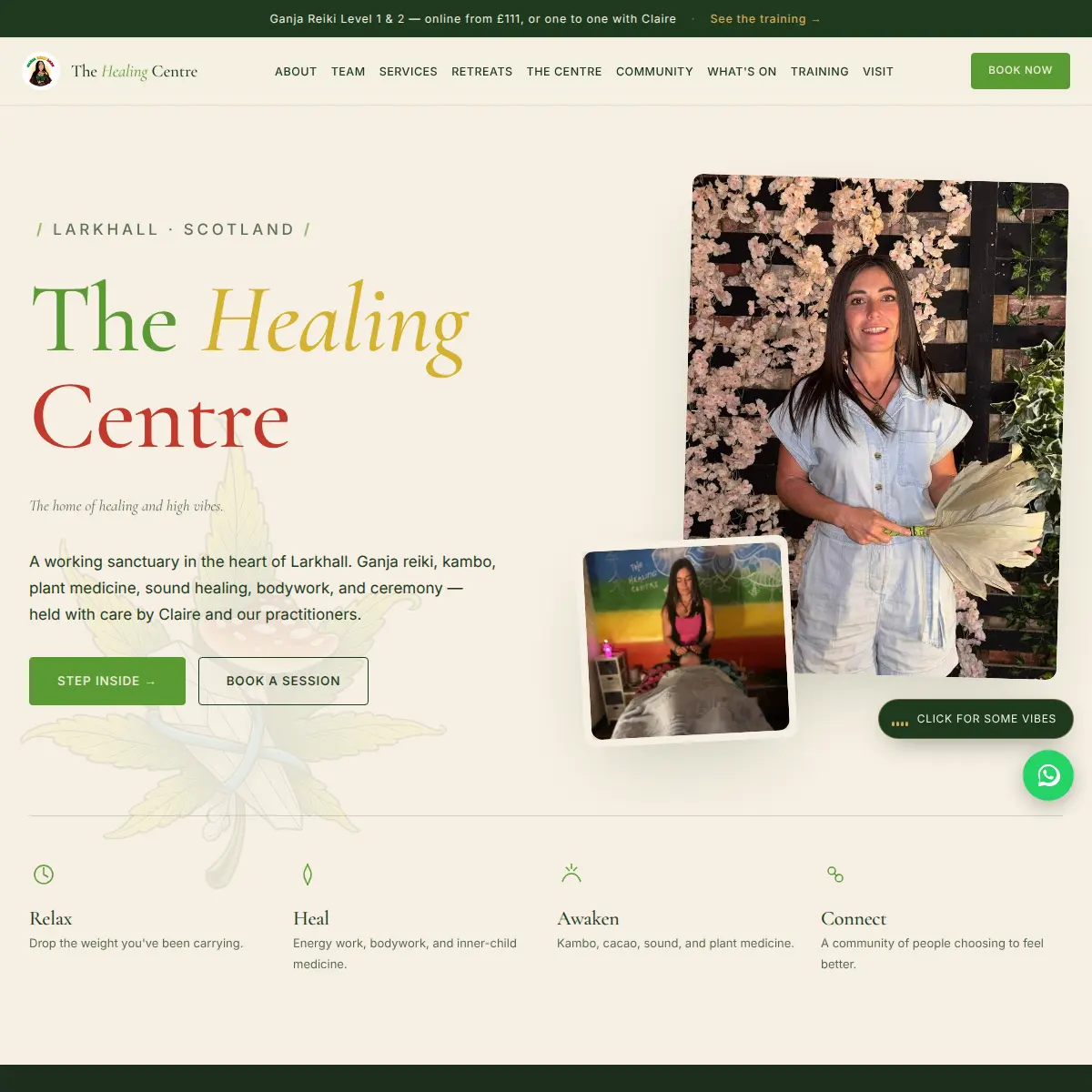
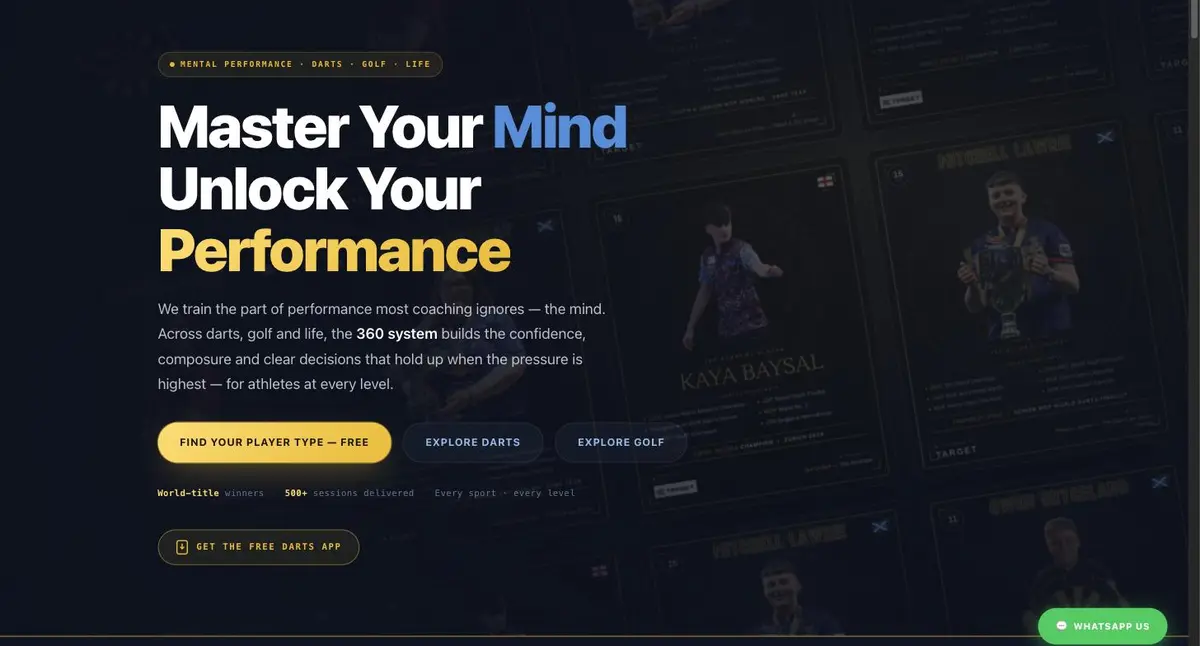
Stuart also runs the mental side of 360 Performance Academy, a darts and golf coaching business we built separately. Over time his personal life-coaching practice had been absorbed into it. That works for athletes. It doesn't work for a stressed professional or a parent who has never picked up a dart, and who needs to see in five seconds that this is for them.
Before
- Life coaching and hypnotherapy hidden inside a sports brand
- 45 five-star reviews with no website of their own to live on
- Email and social all carrying another business's name
- One photo, taken for the sports side
- Nothing for a visitor to do except read and leave
After
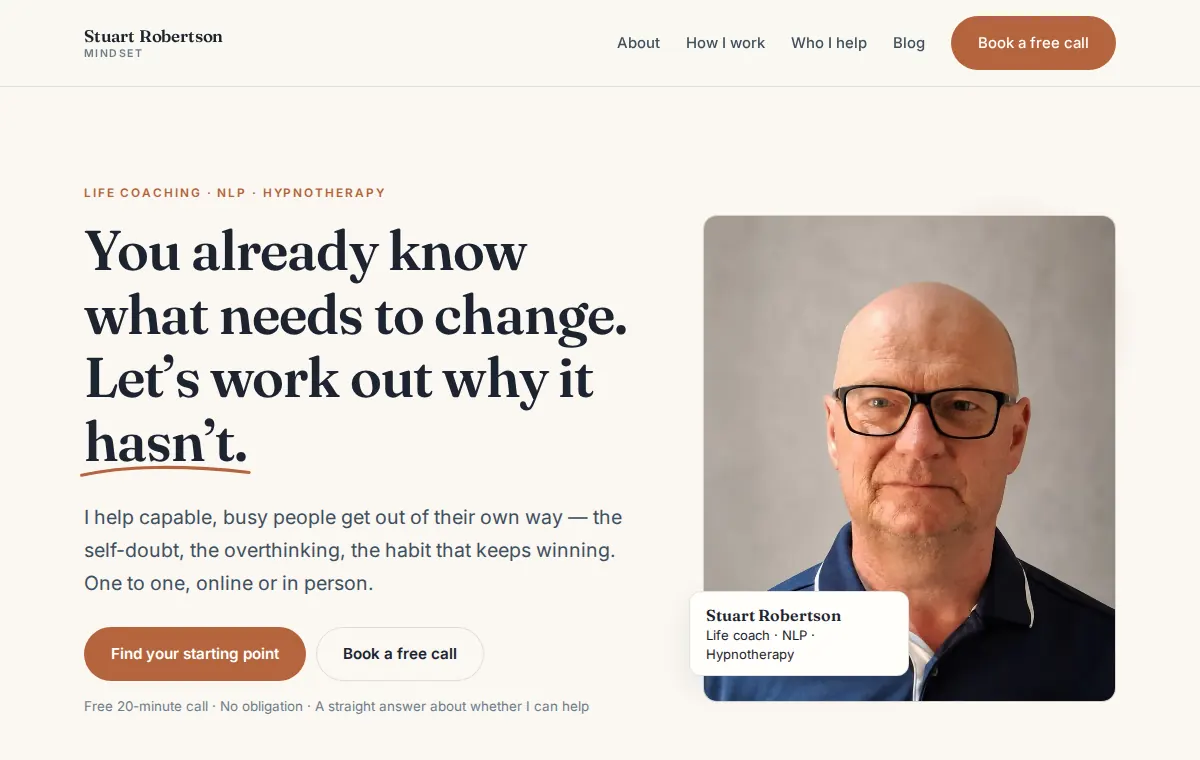
- His own brand, on his own domain, with no sport anywhere on it
- The Google reviews front and centre, linked back to the source
- stuart@stuartrobertsonmindset.com on every page
- A calm visual world that doesn't depend on a photo shoot
- A funnel and two tools that give before they ask
What we built
A separate brand, not a separate page.
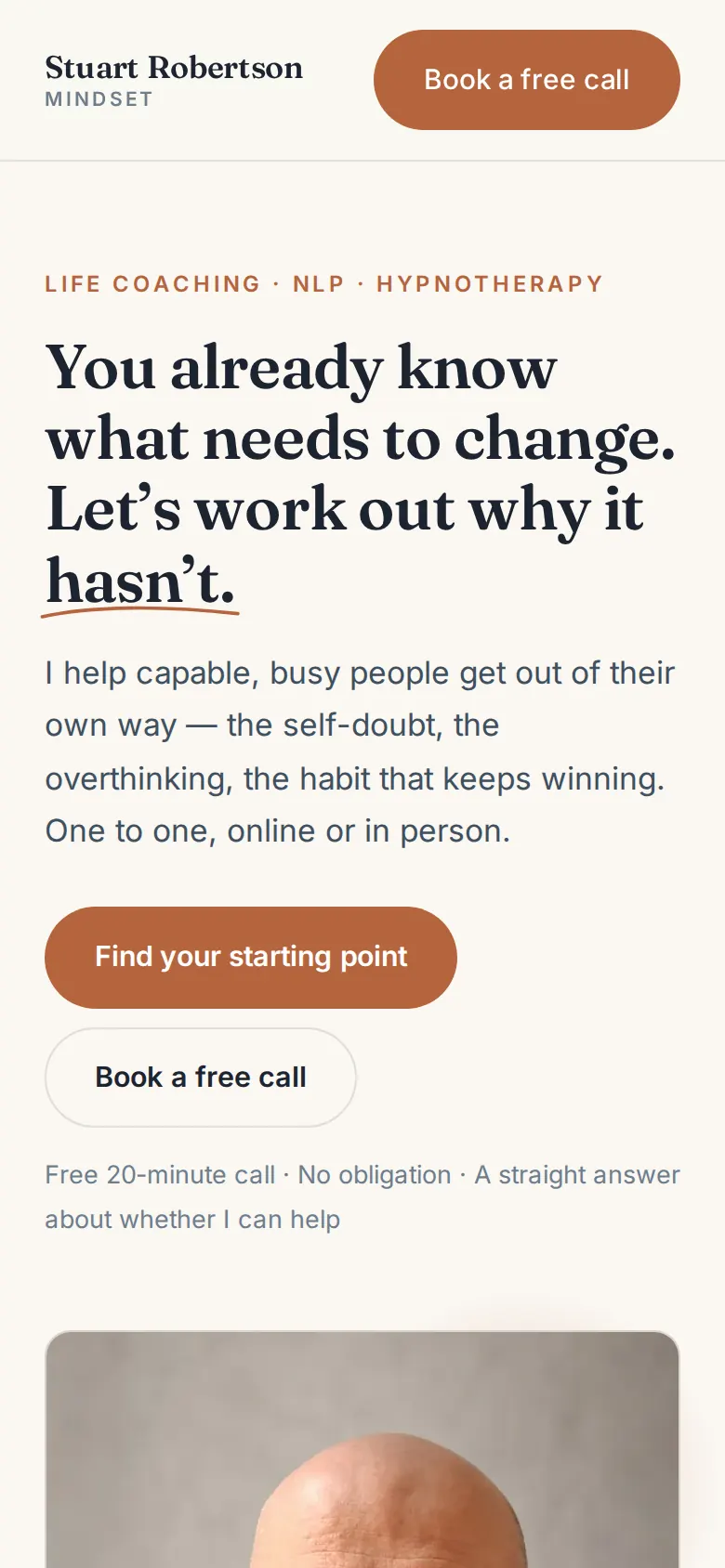
The quick fix would have been a "life coaching" page on the sports site. We built the opposite: a full brand that stands on its own, so it can be found, shared and trusted without anyone needing to know the other business exists.
Own-brand website
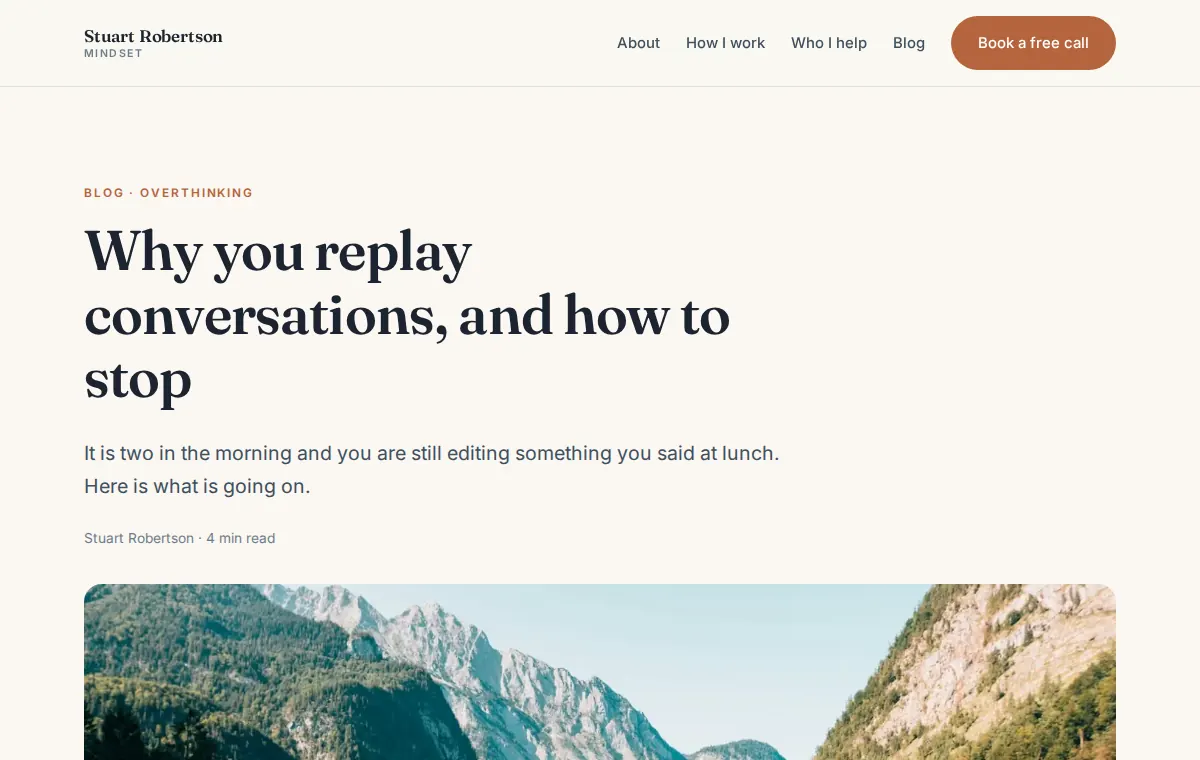
Home, about, how he works, who he helps, contact and a 404 — hand-built, fast, and his outright.
Brand & identity
Cream and clay, Fraunces and Inter. Warm without being soft, a world away from the dark sports look.
Starting-point funnel
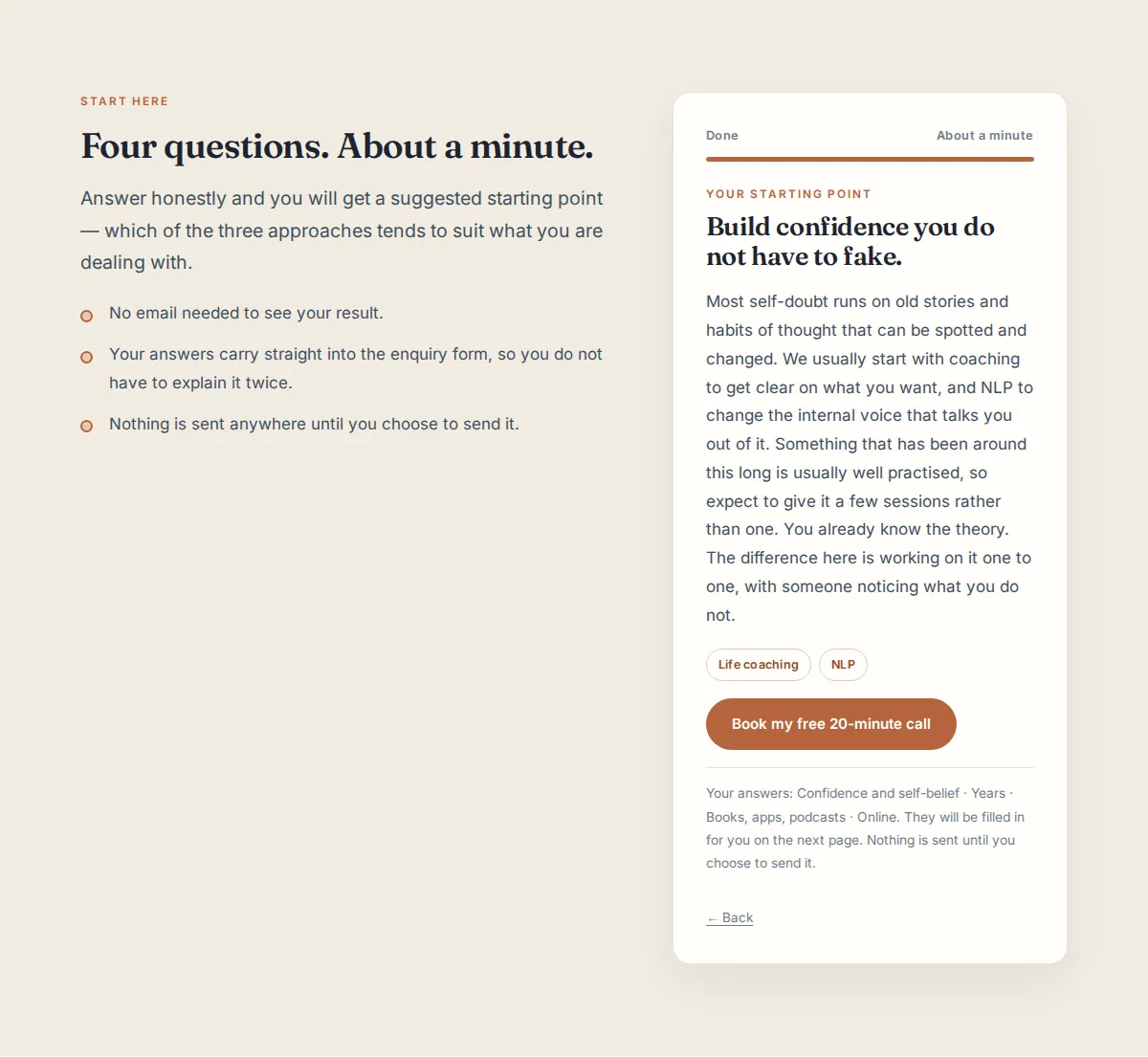
Four questions that suggest the right mix of coaching, NLP and hypnotherapy, then pre-fill the enquiry.
Interactive tools
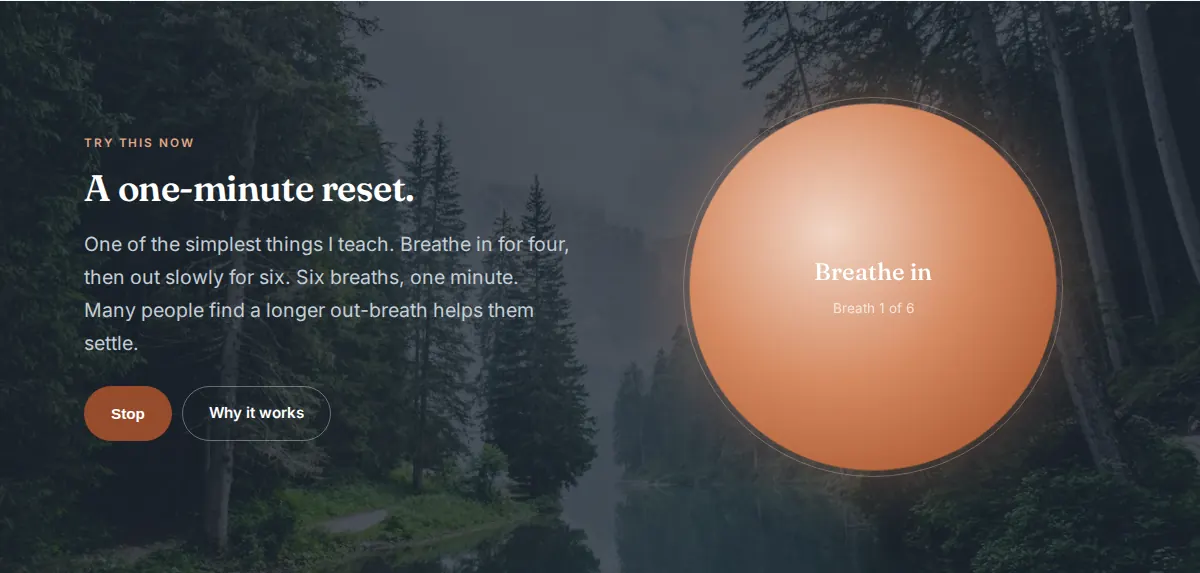
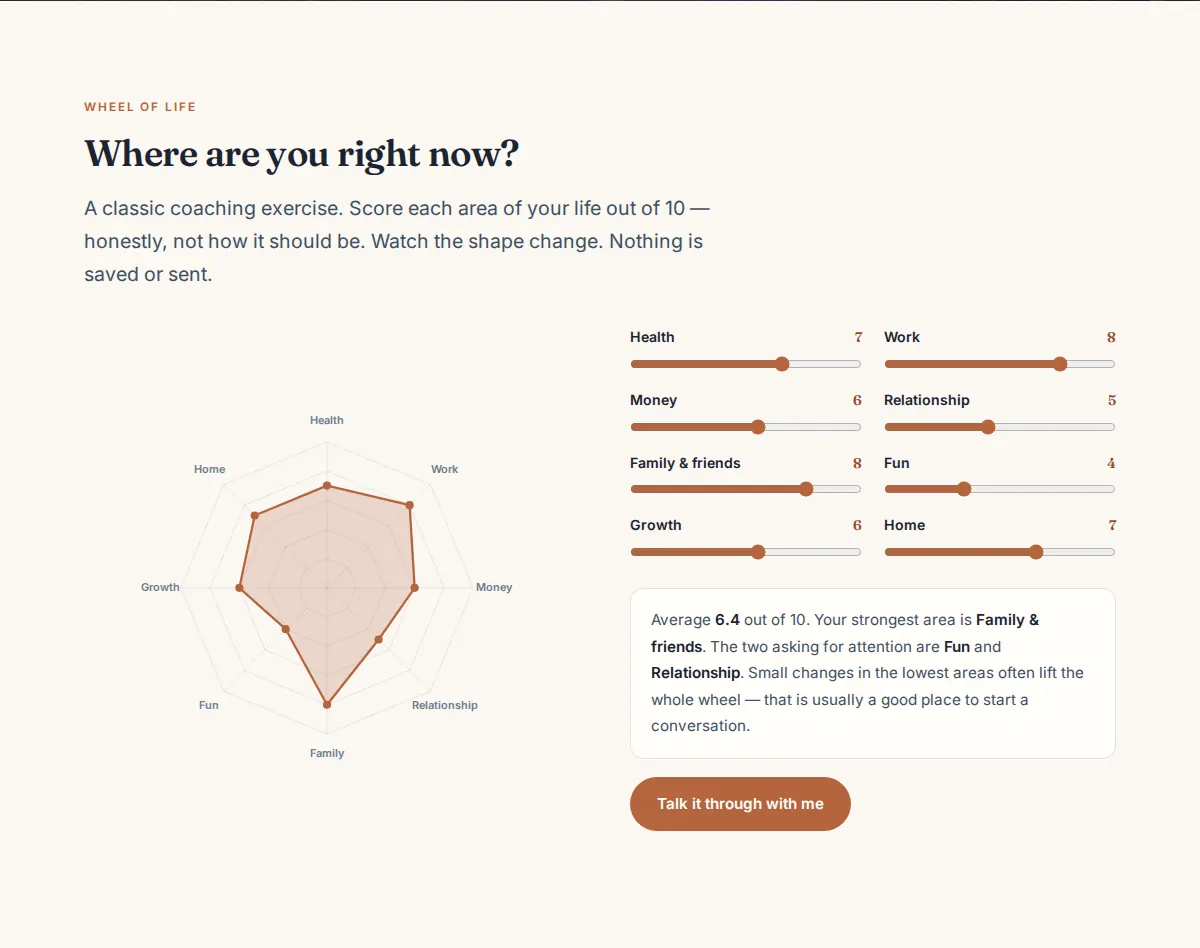
A one-minute guided breathing reset and a live wheel of life, right on the homepage.
Review wall
Real extracts from his Google reviews, named as published, with a link to read every one.
Blog & SEO
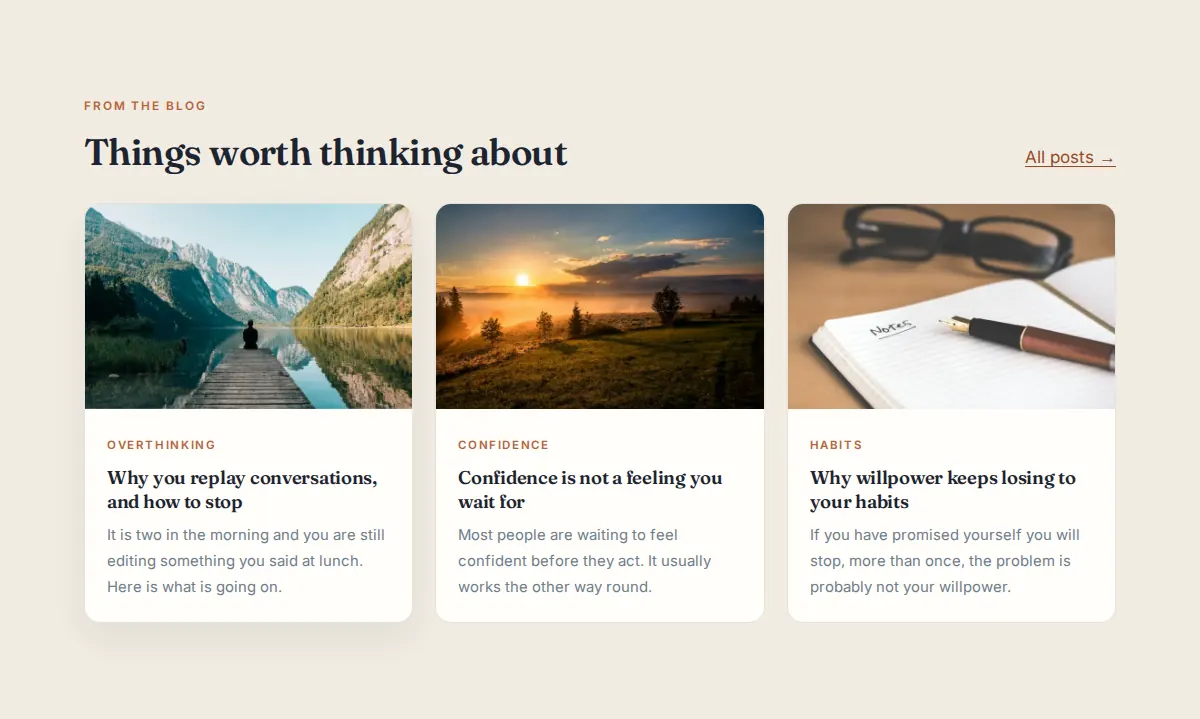
Six practical articles, FAQ and article schema, sitemap and share images — so it can be found.
The funnel
Four questions instead of a blank contact form.
The hardest thing about contacting a coach is the first message. What do you even say? So the homepage asks instead: what you'd like to change, how long it's been going on, what you've tried, and how you'd like to work. A minute later you get a suggested starting point — and one button that carries every answer into the enquiry, already written.
Why it matters more for this kind of business
People looking for life coaching or hypnotherapy are often looking at 11pm, not quite sure they're allowed to ask for help. A form that says "tell me everything" loses them. Four taps and a result that describes their situation back to them feels like the first conversation has already started — and Stuart's reply can start where they left off, not with "so, what's going on?"
Tools, not brochure
Give people something to do before you ask them for anything.
Most coaching sites describe what the coach does. This one lets you try it. Two small tools sit on the homepage, both things Stuart actually uses with clients.
The one-minute reset
A glowing circle paces six slow breaths — in for four, out for six. Press start and you've had a taste of a session.
The wheel of life
Eight sliders, a chart that redraws as you move them, and a plain-English read of where to start.
The reviews
The proof already existed. It just wasn't anywhere people would see it.
Stuart's Google profile carries 45 reviews, every one five stars, from people he has helped with confidence, exams, stress and more. They were sitting on a map listing. Now the best of them open the case on his own homepage, quoted accurately with the reviewers' names as published and a link to read the lot.
“After one appointment, I felt a remarkable change within myself… I felt a newfound confidence that I hadn’t experienced before.”
Margaret Macmillan · Google review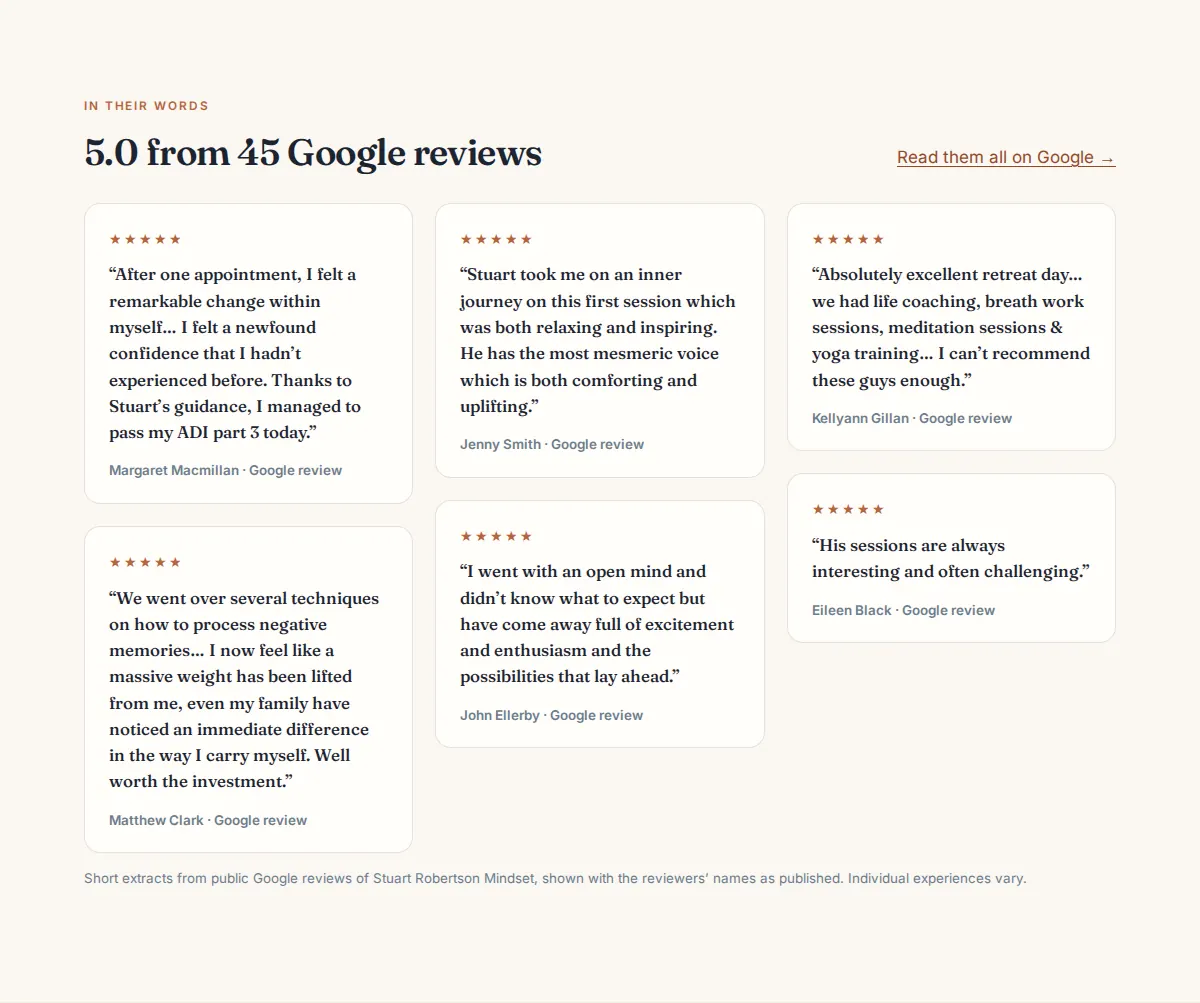
Written to stay on the right side of the rules
Hypnotherapy is one of the areas the UK advertising regulator watches closely. The copy makes no medical claims, says plainly that coaching and hypnotherapy aren't a substitute for medical or psychological care, and points anyone in crisis to Samaritans. Reviews are quoted, not rewritten. It's less exciting than "cure your anxiety in one session", and it's the version that keeps a business out of trouble.
What changed
What the business can do now that it couldn't before.
- Be found for what he actually does. Life coaching, NLP and hypnotherapy in Lanarkshire, on a site that is about nothing else.
- Turn a visit into a conversation. The starting point writes the first message for them, so fewer people leave at the contact form.
- Let people try before they ask. The breathing reset and the wheel of life give a real taste of the work in under a minute.
- Put the proof where people decide. Forty-five five-star reviews, visible on his own homepage instead of a map pin.
- Keep the two businesses apart. His own domain, his own email, his own brand — so neither audience has to wade through the other.
Good at what you do, but your website says something else?
Send us your site — or just your Instagram — and we'll rebuild your main page properly and send it back as a link. Free, with a note on what we changed and why.